
AgeTech · Independent living
Help in the moment.
Clarity for the caregiver.
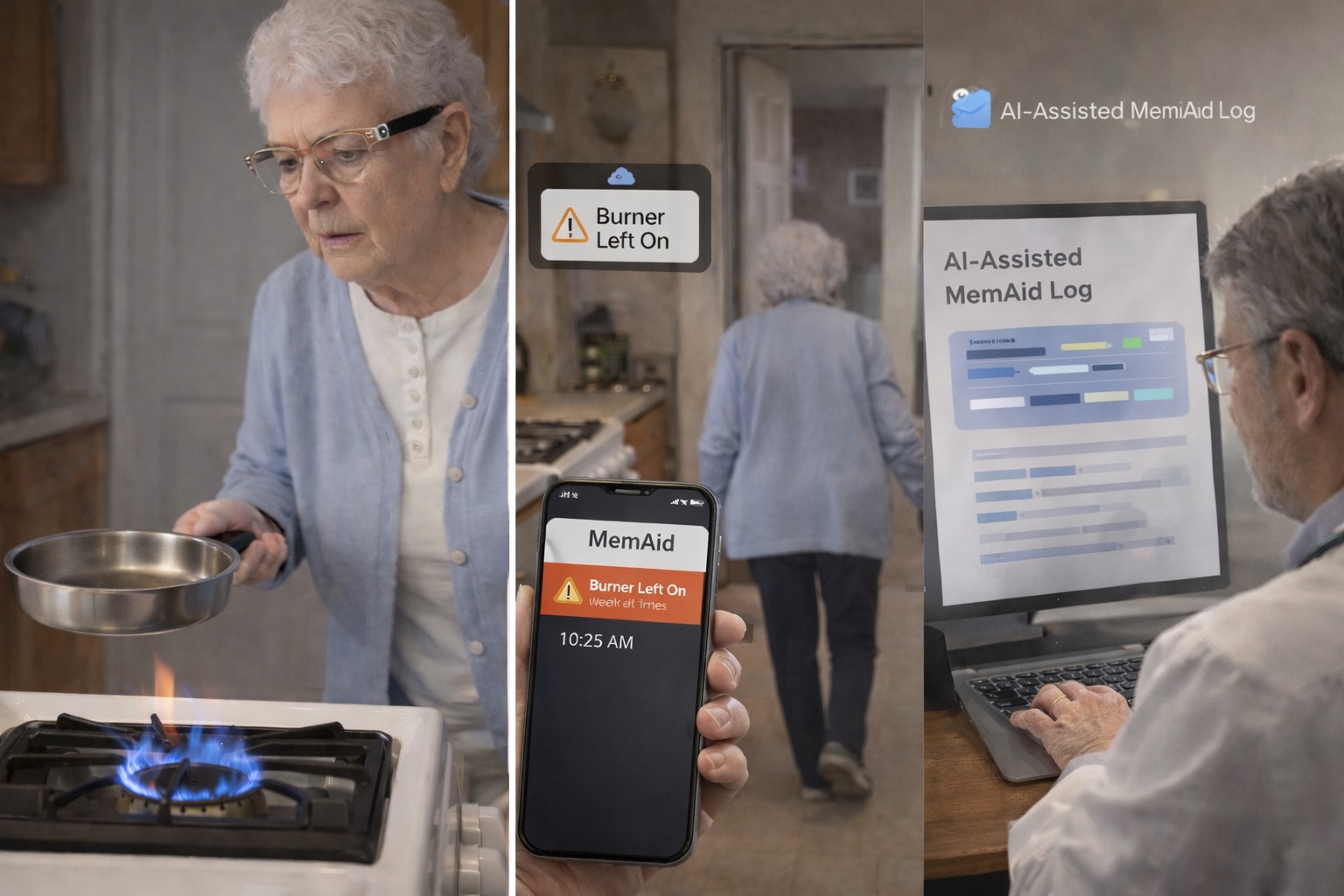
MemAide helps an older adult request assistance from a phone or smartwatch, receive immediate conversational support, and share timely context with a caregiver when human help is needed.
Preliminary prototype · Currently in development
The challenge
A request for help rarely tells the whole story.
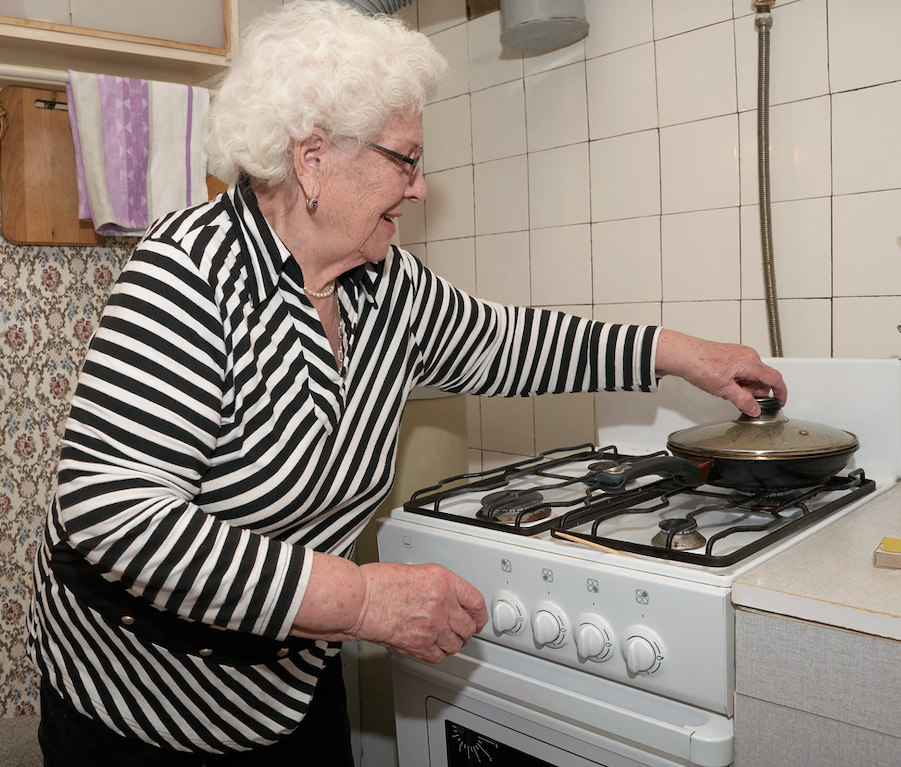
Moments of uncertainty can happen while cooking, taking medication, following a routine, or moving through the home. A brief alert may tell a caregiver that help is needed—but not what happened, how urgent it is, or what response would be most useful.
The MemAide approach
Immediate support, followed by an informed handoff.
MemAide is designed as an intelligent first layer of assistance—not a replacement for a caregiver.
- 01
Help is requested
The older adult presses HELP on a smartwatch or phone.
- 02
MemAide responds
A conversational AI provides an immediate response and asks focused questions.
- 03
Devices add context
Authorized data may include activity, heart rate, reminders, room-level location, and first-person visual context.
- 04
The picture gets clearer
The caregiver portal organizes available context instead of sending an ambiguous alert.
- 05
The caregiver decides
The caregiver chooses reassurance, instructions, a call, or additional assistance.
Demonstrated prototype
One assistance experience, connected across devices.
- HELP initiation from an Android phone and Wear OS smartwatch
- Two-way voice interaction with a conversational AI assistant
- Smartwatch heart-rate, motion, and reminder reporting
- Session-bound visual frames from compatible Meta smart glasses
- A caregiver portal for reminders, wellness trends, help history, and stream status
- A caregiver telephone-call action from the phone or watch
Capabilities have been demonstrated in a controlled development environment. Availability, reliability, device compatibility, and final behavior remain subject to development and testing.
Privacy and dignity
Session-bound, not always-on.
MemAide is being designed around deliberate assistance sessions rather than continuous visual monitoring. First-person visual context is intended to activate only when an authorized help workflow needs it and to stop when that session ends.
Specific security, retention, consent, and privacy controls are still being validated and will require final documentation before deployment.
In development
Building the complete caregiver handoff.
Reliable recognition of caregiver-escalation requests
Dependable caregiver notification and acceptance
Continued context during an authorized caregiver interaction
Appropriate telephone or portal-based two-way audio
Stronger device recovery and reconnection
Production privacy, security, auditing, and monitoring
Shape what comes next
A more informed approach to aging at home.
We welcome conversations with caregivers, researchers, aging-in-place organizations, and technology partners.